“The saddest aspect of life right now is that science gathers knowledge faster than society gathers wisdom” Issac Asimov.
Last May, I attended my grandson’s college graduation where he got a degree in Sustainability. What I found interesting was the graduates obtaining degrees in Complex Adaptive Systems Science (CASS). This essentially was learning the ability to understand the interconnections within and between technological, economic, societal, biomedical and environmental systems. Sounds good, but nowhere does it indicate the natural world as anything except resources to be used, maybe wiser than now, but not as part of the interactive anthropocentric-natural system. The spiritual connection is dismissed, probably because it is not considered ‘scientific’ enough to include. Our major problem, as I have emphasized often, is that our technology has advanced faster than our morality.
Many scientists have pointed this out. Even back in the early 1960s, Rachel Carson said; “Mankind has gone very far into an artificial world of his own creation. He has sought to insulate himself, in his cities of steel and concrete, from the realities of earth and water and the growing seed. Intoxicated with a sense of his own power, he seems to be going farther and farther into more experiments for the destruction of himself and his world” and “Now, to these people, apparently, the balance of nature was something that was repealed as soon as man came on the scene, when you might just as well assume that you could repeal the law of gravity. The balance of nature is built on a series of interrelationships between living things and between living things and their environment.”
Interestingly, the major critic of Carson (Robert White-Stevens, Assistant Director of the Agricultural Research Division of American Cyanamid Chemical Company) exemplifies the discord between Carson’s observations and the ‘dominance’ mindset that still exists; “The crux, the fulcrum over which the argument chiefly rests, is that Miss Carson maintains that the balance of nature is a major force in the survival of man, whereas the modern chemist, the modern biologist, the modern scientist believes that man is steadily controlling nature.” This discord exists today and is coupled with an unwillingness to see how complex systems are creating change for which human adaptations are essential, and that these adaptations are not just technological in nature.
As scientists thinking within a dominant materialist-scientific paradigm, thinking we can control nature seems obvious enough, but philosophic observations readily reveal that whenever humans think they control nature, some natural ‘Act-of-God’ happens that shows us just how ineffectual we are in controlling any natural system. So, when I hear about CASS as a way of thinking that apparently disregards the role of humans within the natural system, I come back to seeing how essential it is we recognize the need for Systems Thinking on a larger scale with humans as an interactive part of the natural system, especially if we are to successfully adapt to a future with disruptive ecological systems.
A monk once said, “Imagine being bitten by a venomous snake, and instead of focusing on healing from the poison, you chase the snake to understand why it bit you and to prove that you didn’t deserve it” Anonymous. As I interpret this, we are currently running around trying to find technology to resolve our problems that we ourselves created with our technological dominance mindset, instead of trying to understand what it was about our separation that created the problems. In a nutshell, we act ‘Amorally’ towards the natural world instead of seeing ourselves as an integral part of the natural system with a moral obligation to harmonize with it, as we use and change it.
Then to compound the problem we put control of everything into the hands of socio-psychopaths who couldn’t care less about anything but their power and control. “The fact that so many successful politicians are such shameless liars is not only a reflection on them, it is also a reflection on us. When the people want the impossible, only liars can satisfy” Thomas Sowell. As such we accept the impossible as normal, such as our current capitalist system, which we know is corrupt and wrong on so many levels, even if we in the developed (the supposed affluent 20%) world seem to benefit – but increasingly less and less so.
“Anyone who believes in indefinite growth on a physically finite planet is either mad, or an economist” David Attenborough. We have been conditioned to see the world as these corrupt leaders want us to see it, and we accept it without question, even when it doesn’t make sense, because we accept ‘that is just how it is.’ Look at the linked picture and explain it. Everything in the picture is real with no trickery, photoshopping, or editing of any kind. I know I have said this so many times, this picture metaphorically represents life as we currently live it – it doesn’t work for us and never has. It is just the cultural story humanity has lived for thousands of years as perpetuated by a hierarchy. There is a natural way for humans to live with each other and the natural world. All we have to do is see everything from a different perspective, ignore the hierarchical story we bought into so long ago, and start living a new story. How easy is this? As easy as seeing the linked picture above from a real perspective!
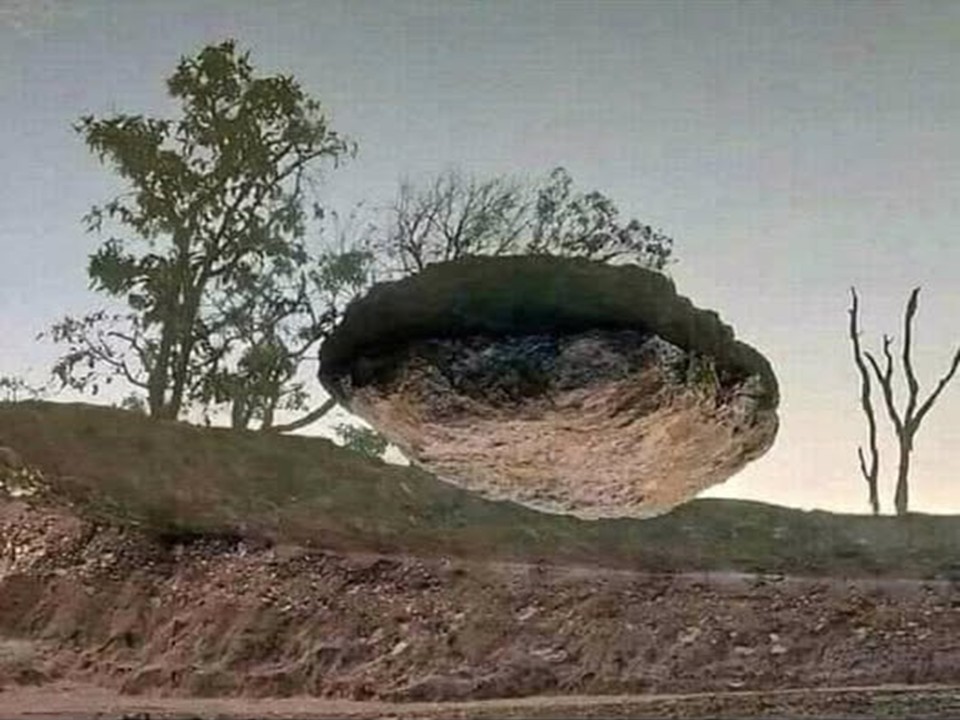
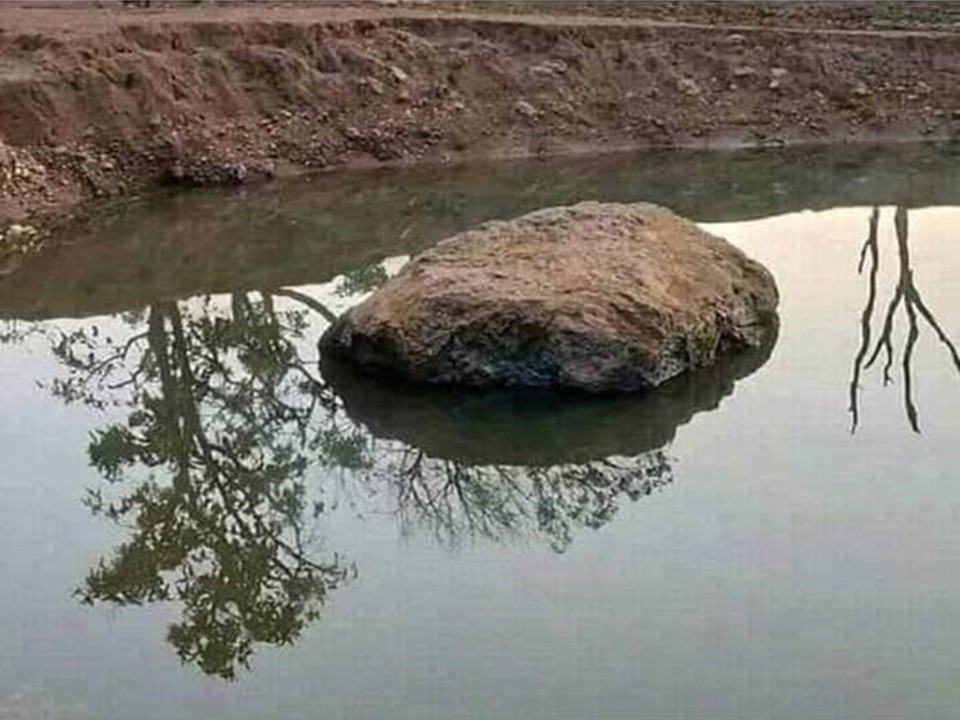
Einsteins comment about the inability to solve problems from the same thinking that created them is so apparent, but what we don’t do, and what I am trying so consistently to do, is show what that different way of thinking really is. Our global and cultural solutions are not mind-boggling technological innovations as envisioned by the technocratic hierarchy, but simple ones created by us – all of us, at the local level. How effective can that be?
In 2020, when the world shut down for Covid-19, we saw amazing comebacks in the natural world – maybe the only positive thing to come out of the pandemic lockdowns. Many forms of pollution levels dropped sharply as globally, transport and industrial manufacturing decreased. Even as the air quality improved, we also saw marine environments improve. For example, In Venice, Italy, as the water quality improved, Dolphins and many fish species were seen swimming in the Lagoon after many decades of being absent. Global climate disruption may not be as readily resolvable, but by simply changing how we live technologically we can expect marked improvements of a myriad of our global environmental problems, including socio-cultural ones where war, large-scale violence, and poverty can also become quickly obsolete.
Indigenous peoples do not have words for poverty, because poverty is a factor of our current global capitalist creation in which scarcity is a central component of the paradigm. When we stop commodifying everything within a global system and turn inwards to our local regions, we will find new forms of work and living that redefine how we think of ourselves as humanity. I had always hoped we would make these choices voluntarily, but as one of my friends said recently to me, “It’s going to take a really big kick up the rear end to get us to change.” We are going to think Systemically if we are to adapt and thrive. Systems thinking is a Wholistic way of making sense of the complexity of the world by looking at it in terms of wholes and relationships rather than by reducing it down into its parts, which we think we can control. Unfortunately, the natural world works systemically, which is why we are always flummoxed when our attempt to control nature always go awry.
As I wrote in another blog recently that I submit to; “Our modern world is reduced to and controlled by economic expediencies, and modern globalization has created industrialized systems and supply chains that are practically incapable of adapting to disruptive ecological conditions. Two of the most essential primary needs for modern human society are energy and food. Energy has always been the most restrictive aspect of human endeavor, but until relatively recently, food was not such a primary concern. Today, with growing urbanization, the majority of people in the developed world now rely on energy grid systems and the import of food over vast distances. In 1949, Leopold had a sage comment about these social systems, “There are two spiritual dangers in not owning a farm. One is the danger of supposing that breakfast comes from the grocery, and the other that heat comes from the furnace” Aldo Leopold, A Sand County Almanac.”
Re-localizing energy and urban agriculture is a first step in building community resilience in which humanity thrives and finds unity within its own ranks as well as with the natural world. Living new values of interconnectivity and finding a spiritual connection to the natural world and each other are but the start of a sustainability revolution where quality of life is good for everyone and the great healing of the planet is realized. I know most people want a bulleted list of what and how to do this. As I have always maintained, there are principles of sustainability, which is why my text was named that way, but for those in which this great healing seems overly daunting, let me give practical examples and ideas that will make this coming transition easier.
To Be Continued …………….
0 Comments